
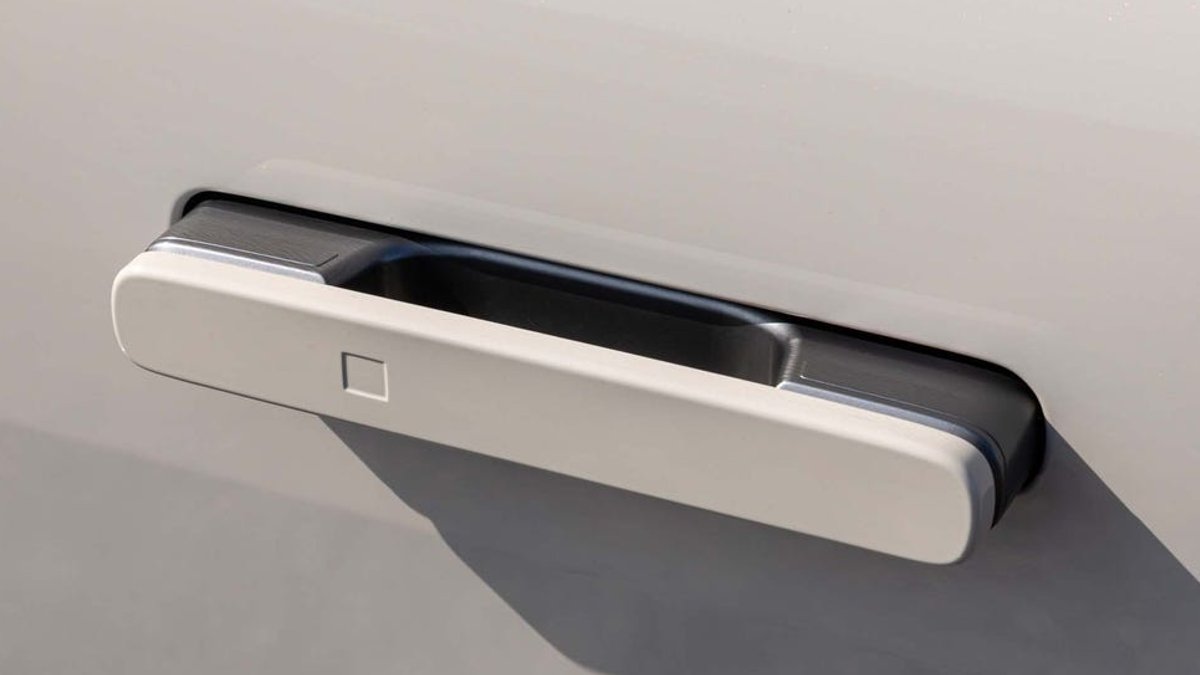
The National Highway Traffic Safety Administration (NHTSA) announced it is beginning a rulemaking process focused on door handle safety after a series of high‑profile incidents where vehicle doors failed to open.
Petition prompts agency review
A petition prompted the agency to examine whether the 2022 Tesla Model 3’s doors met existing federal standards. The request highlighted several crashes in which doors remained stuck, reportedly contributing to as many as fifteen fatalities. The filing argued that the vehicle’s emergency‑operation mechanism did not comply with current regulations.
NHTSA declined the petition, but they will develop new safety standards that apply to all manufacturers selling vehicles in the United States. These rules will address the broader issue of mechanically versus electrically operated door handles.
Related: AEV Reveals Second Ford Super Duty Off-Road Package
Industry response and ongoing investigations
Tesla and Rivian have disclosed plans to redesign their door‑handle systems. Tesla’s lead designer, Franz von Holzhausen, previously indicated the company was reworking the components after complaints that passengers had become trapped inside. NHTSA is also conducting its own investigation into specific incidents involving difficulty entering or exiting Tesla models.
Historically, external door handles were simple pull‑type mechanisms on most cars, while high‑performance models sometimes omitted them entirely. The push for aerodynamic efficiency led many manufacturers to adopt flush, electronically actuated handles, which eliminated many of the mechanical linkages that previously ensured reliable manual operation.
The agency’s timeline for finalizing the new standards remains uncertain. Rulemaking typically involves a period of public comment, followed by drafting and final issuance, a process that can span months or even years.
Related: US Slows Pace of EV Charger Installations
Potential impact on consumers
Should the regulations require a secondary mechanical release, the design of future electric vehicles could shift back toward more traditional handles, or at least incorporate redundant systems. That would likely add cost and weight, but it could also restore confidence for families who worry about being locked inside a car.
The NHTSA’s action signals a heightened focus on occupant safety in a market where vehicle architecture is rapidly evolving. They will be closely watched by automakers, safety advocates, and drivers alike.


