
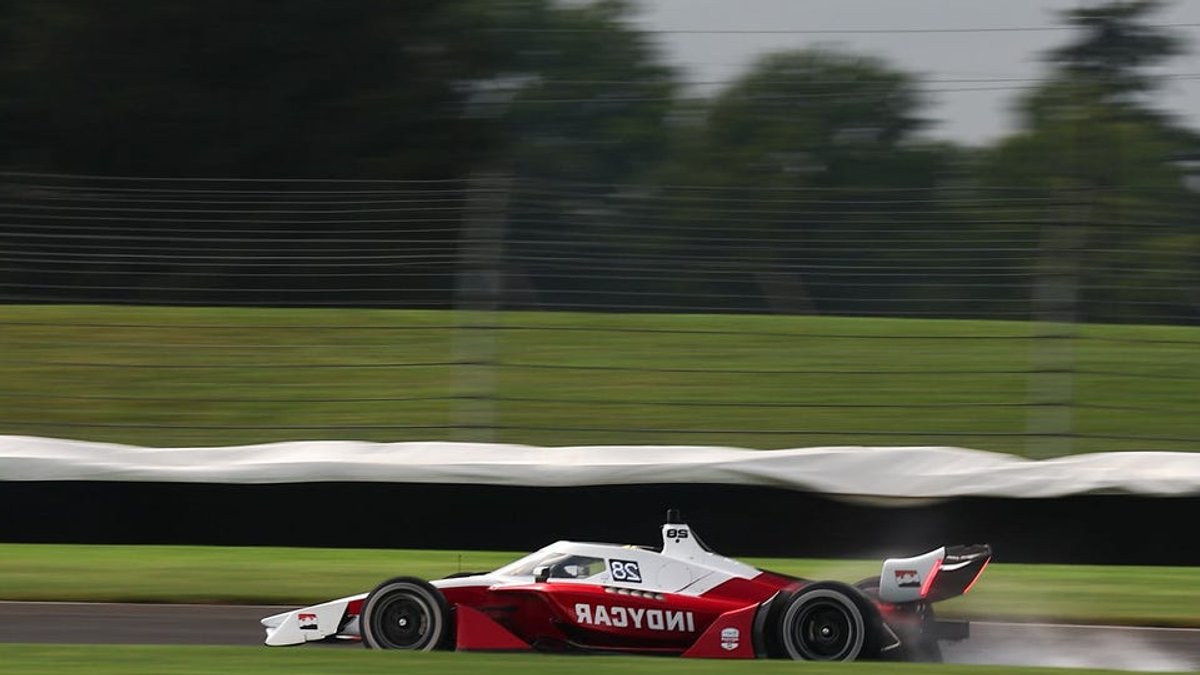
On a rainy Saturday in Speedway, Indiana, Alexander Rossi became the first driver to test the first new IndyCar chassis since 2012, validating the design at the Indianapolis Motor Speedway’s Road Course. The IR28 is scheduled to replace the current IR18 model for the 2026 season, marking the first major structural change to the series’ race cars in over a decade. Rossi, driving for Ed Carpenter Racing, was selected as the Chevrolet representative for the initial outing alongside Chip Ganassi Racing’s Alex Palou, who pilots a Honda.
Rossi noted that the differences in the cockpit are noticeable before the car even reaches speed. The new chassis offers significantly more space and improved ergonomics, allowing for better integration of cooling systems. Drivers sit higher and feel less vibration at speed, which Rossi attributes to high build quality. The ride was described as remarkably smooth, though Rossi admitted it is too early to assess the car’s pure performance or balance. He emphasized that the driving experience remains familiar to drivers accustomed to the current series car.
Related: Undercover officers catch 74 distracted drivers
“Man, it’s pretty cool,” Rossi told IndyCar’s in-house media. “It’s a very big honor to kinda be the first guy to experience it, and to do it at IMS is the cherry on top. It’s been a fun day and a half so far, and I look forward to seeing what else we can learn.”
Despite the positive early impressions, there are minor mechanical issues to address. Indycar’s Vice President of Competition and Race Engineering, Mike O’Gara, said that the development team has already identified a problem in the car’s plumbing system that requires attention. The team is also monitoring for potential chafing of wires and hoses as the car generates more heat during extended running.
Early validation
“So far, it’s doing everything it’s supposed to,” O’Gara said. “We’ve already found a couple of things, one thing on the plumbing system that didn’t stop the car from running, obviously. But something that needs a little attention. The more we run it, the more we get heat into the car, the more we see where wires and hoses may chafe on each other, where things may vibrate, and we need to put more insulation or padding.”
Related: US Probes Car Door Handle Safety Standards
O’Gara called Saturday’s validation a significant milestone. The fact that the car worked immediately after assembly is rare in the development of new race cars. The test run confirmed the vehicle’s viability, allowing the team to move forward with further data collection and refinement before the 2026 rollout.
While the car drives similarly to the current IR18, Rossi noted that the track conditions during the test were not ideal. The track was drying, and Rossi reported feeling a noticeable amount of load in high-speed corners despite the wet weather. This suggests the car’s aerodynamics and downforce levels are functioning within expected parameters.


