
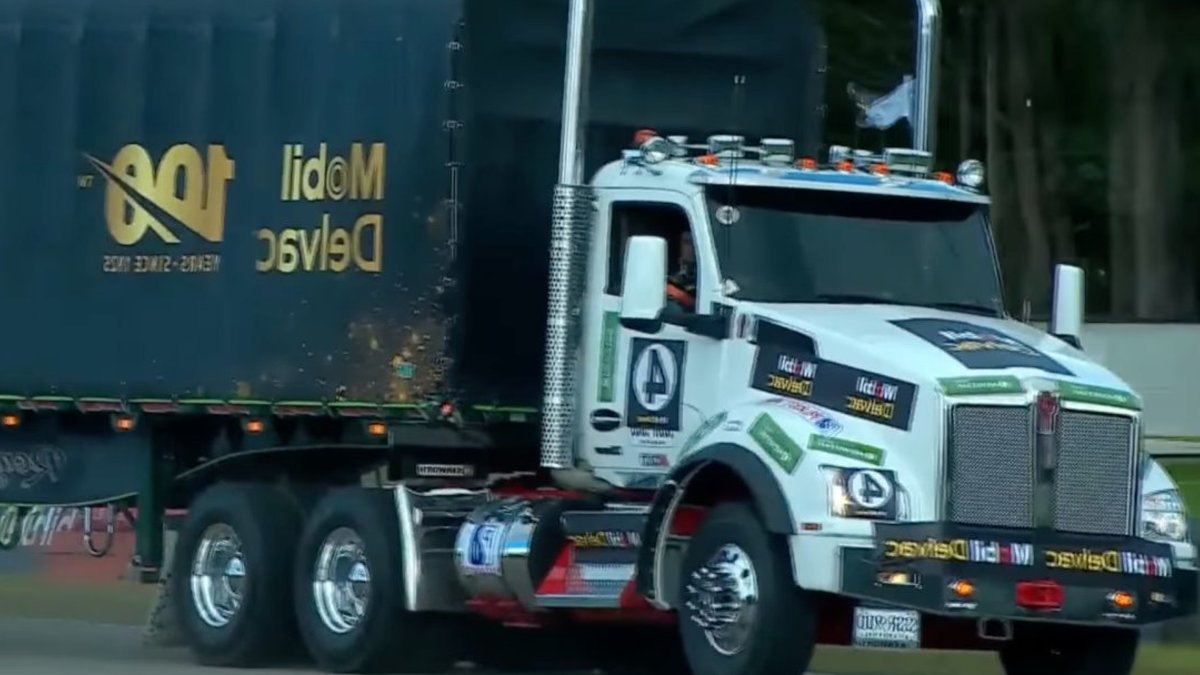
Gran Premio Mobil Delvac has been drawing semi‑truck enthusiasts to Colombia’s Autodromo de Tocancipa each July since 1988, turning a commercial haulage arena into a high‑speed test of skill.
The event challenges participants to complete laps while pulling a trailer, a twist that sets it apart from other semi‑truck series that typically keep the tractor alone. Drivers also weave through slaloms and stop‑box sections reminiscent of autocross, demanding the kind of precision that could prove useful on the busy streets of Bogotá.
Most fuel‑system components remain unrestricted, yet turbochargers are subject to strict limits. Only specific turbo models may be paired with each engine, and modifications such as variable geometry, ceramic bearings, or water‑cooling are expressly forbidden. Nitrous oxide is also illegal, and all trucks must have six axles, with both rear drive axles engaged for the race.
Related: Collector Wins 1948 Buggy Featured in Mad Max
These constraints create a level playing field where raw driver ability shines. The competition does not attract full‑time professional racers; instead, any trucker who purchases a five‑gallon bucket of oil from sponsor Mobil can sign up. For the most recent edition at the end of July, the organizers reported that 150 drivers turned up, echoing the grassroots spirit of early stock‑car racing.
While the field is large, the race remains a niche within a niche. Semi‑truck racing has existed for decades, with series ranging from road‑course contests to drag pulls and sled‑pull events. Yet, as far as available records show, no other championship combines a road‑course layout with a trailer‑towing requirement.
Past editions have been streamed on YouTube, offering a window into a motorsport world that feels both familiar and wildly unconventional. Spectators can watch massive rigs thunder past corners, their six‑axle setups gripping the tarmac as both rear drive axles stay engaged throughout the event.
Related: Singer Partners with Louis Vuitton on Porsches
Rules That Keep the Competition Fair
Beyond turbo restrictions, nitrous oxide is outright banned, ensuring that power gains come from engine tuning rather than chemical boost. The six‑axle requirement means each vehicle must retain the full drivetrain layout typical of highway haulers, with both rear axles delivering power to the road.
The combination of strict equipment rules and a demanding course creates a unique spectacle. While some may view the concept as a novelty, the participants treat it as a serious test of both vehicle handling and driver endurance.


