
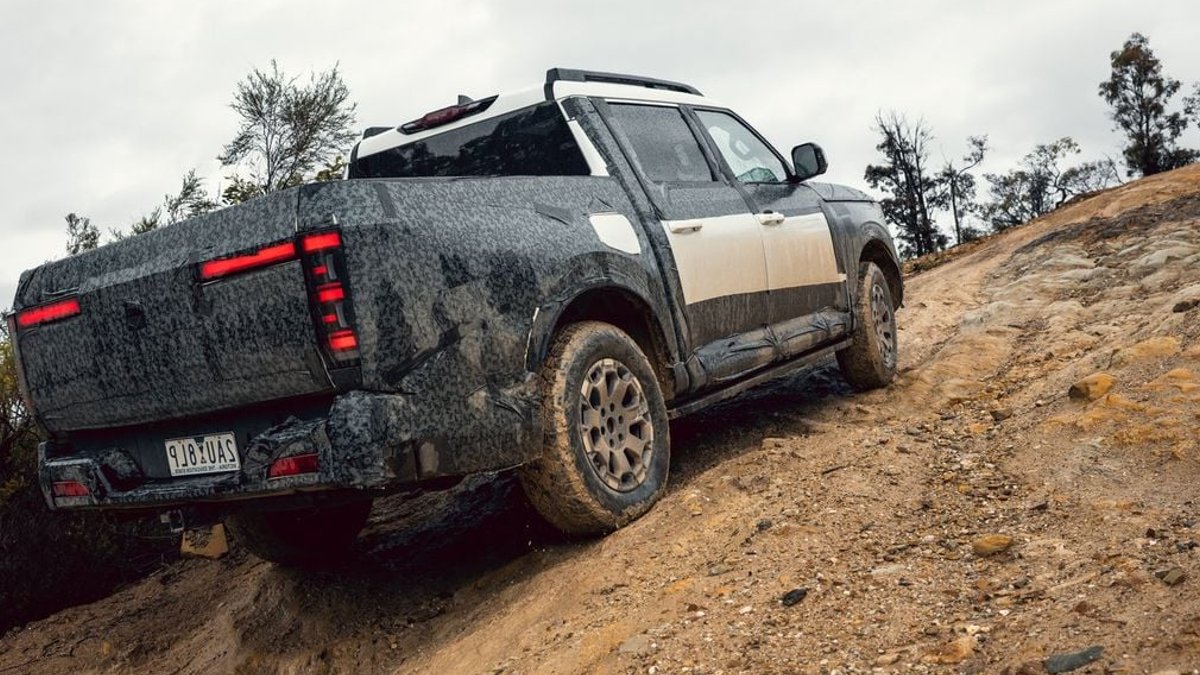
Nissan may offer its upcoming Navara Pro PHEV with options for either leaf-spring or coil-spring rear suspension systems. The automaker is assessing both suspension setups for the Australia and New Zealand markets, with a domestic debut scheduled for 2027.
According to Nissan engineers, the approach could allow the company to cater to different priorities among ute buyers. “We’ve got two suspension types that we’ve been evaluating, so both leaf spring and coil spring, and various iterations of each as part of that evaluation,” they said during a technical briefing.
Suspension Options
Traditionally, light commercial vehicles were used as work vehicles, but now customers expect a more comfortable ride, strong posture at high payload, and a secure feeling when towing big loads. The suspension needs to meet these expectations, and Nissan is evaluating both leaf-spring and coil-spring configurations to achieve this.
In the previous D23 generation of Navara, leaf springs were fitted to single-cab and King Cab models, while dual-cab variants used coil springs. The new Navara Pro PHEV could offer both configurations, bringing back a point of difference for Nissan.
Technical Specifications
The Australian-market Navara Pro PHEV will be powered by a 2.0-litre turbocharged petrol engine, paired with an electric motor integrated into an eight-speed automatic transmission. Nissan is targeting combined outputs of 300kW and 800Nm, although these figures remain subject to final homologation.
The Navara Pro PHEV will use a mechanical four-wheel drive system, with a targeted 1000kg payload and 3500kg braked towing capacity. These figures would put the electrified ute closer to the working capabilities of conventional diesel-powered rivals.
Nissan is also evaluating a range of other hardware and calibration options for the Navara Pro PHEV, including tyres, differential configurations, towing performance, payload capability, and off-road driving modes. The company has yet to confirm which suspension setup will make production, but offering both remains a possibility.
As the Navara Pro PHEV nears its launch, Nissan’s decision on the suspension configuration will determine the vehicle’s capabilities and appeal to customers. With the company’s focus on meeting the evolving expectations of ute buyers, the Navara Pro PHEV is likely to be a significant player in the market. The choice of suspension will play a significant role in this, as it will affect the vehicle’s performance and comfort.


