
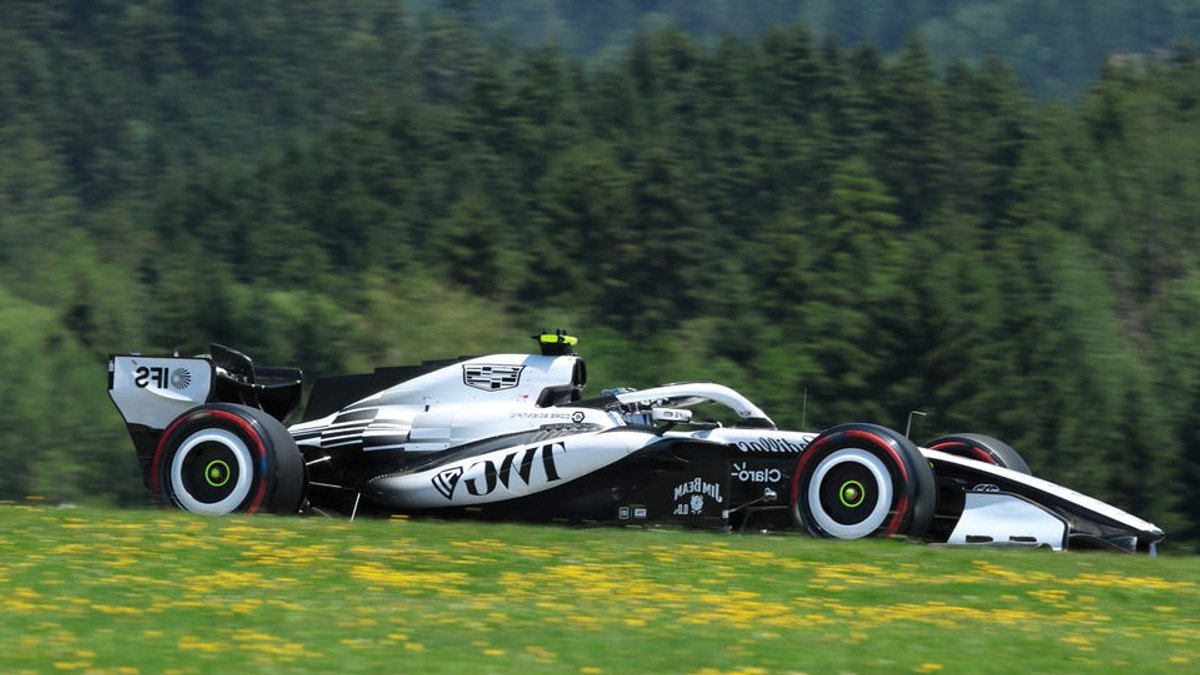
Reliability continues to frustrate Cadillac drivers even as General Motors’ Formula 1 program makes measurable progress in its inaugural season.
The summer break offers a rare pause for the new Cadillac squad, a necessary respite after a grueling schedule that began in January. The team is handling significant changes to power units and chassis regulations, a challenge compounded by the fact that this is their first time competing in the series. Graeme Lowdon, who leads the project, acknowledges the difficulty of the situation while emphasizing that standing still is not an option. “Nobody has the luxury to stand still in F1,” Lowdon told Road Track. “So we can’t just come in and then stand still while we acclimatize to everything. We’ve got to keep pushing.”
Related: 120 Grand Prix Drivers Celebrate 100 Years Brooklands
Progress is evident. The team credits early chassis readiness for allowing drivers Sergio Perez and Valtteri Bottas to log miles quickly, even if the initial specification was basic compared to rivals. Since Melbourne, the introduction of new parts has generally improved the car’s overall performance. McLaren team principal Andrea Stella highlighted these steps during the Austrian Grand Prix, noting the steps Cadillac has taken. Lowdon sees this validation as a sign that simulation tools are functioning correctly, though he insists the team cannot be complacent. The data suggests the gap to the front is closing, but the competition is also evolving.
The contrast between Cadillac’s rapid construction and the established history of teams like Aston Martin offers a useful perspective on the team’s current standing. Aston Martin, which traces its lineage back to 1991, has recently struggled with its own performance and reliability issues. In this context, Cadillac’s mix of rapid improvement and operational growing pains appears to be a natural, albeit painful, part of the learning curve. The team is simultaneously developing the current car while preparing for the 2027 model, a dual focus that tests every department of the organization.
Related: Teen driver reaches 140 mph during police chase
Race-ending reliability issues
Despite the mechanical improvements, the team has struggled with reliability issues that are relatively uncommon at this level. Poor reliability has been very costly, with a series of retirements that range from one-off garage mistakes to design flaws. One recurring problem has been brake cooling, which first appeared in Monaco and resurfaced in Hungary, forcing Bottas to brush the pit entry barrier to prevent his car from catching fire.
The most worrying setbacks have involved front suspension failures. Perez experienced different front suspension problems in Canada and Hungary, stopping the car safely in both instances but highlighting a significant weakness in the design. Bottas acknowledged the frustration, noting that it is the second time he has retired due to suspension issues. “Obviously, being a new team, you kind of expect all these issues,” Perez said. “I think it’s a little frustrating that it has happened very often.”


