
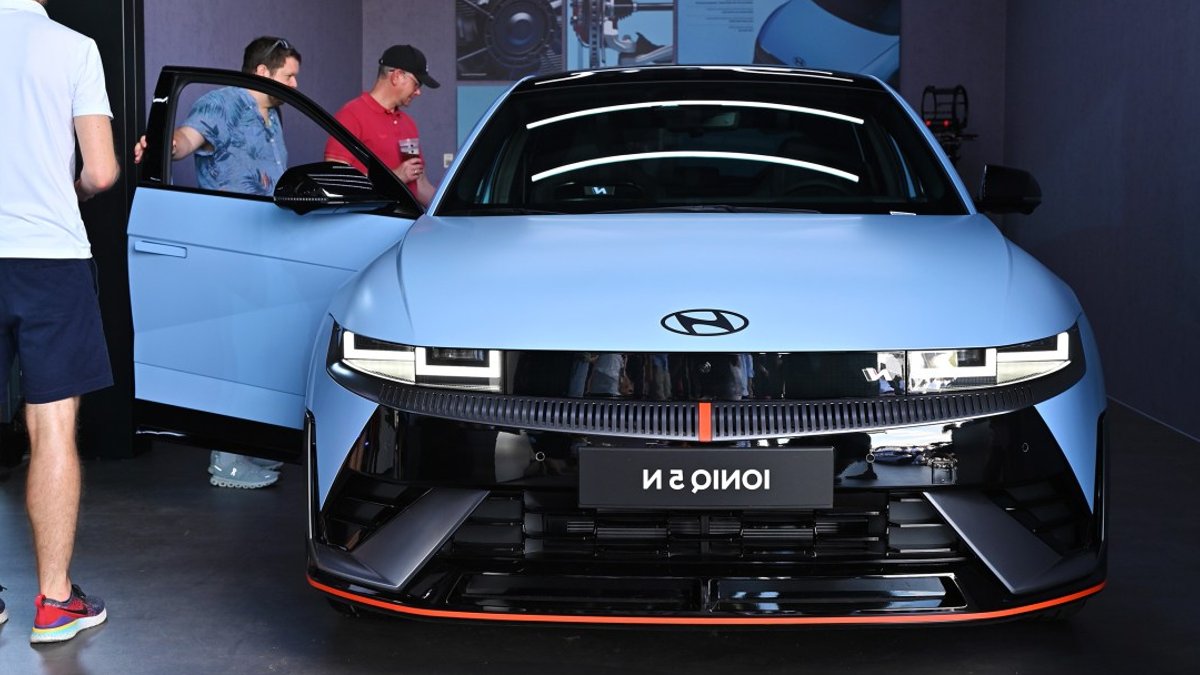
Hyundai plans a new class of performance cars to fill the gap between its sporty “N Line” models and full-fledged “N” track cars. The strategy, revealed during the company’s Investor Day in South Korea, targets drivers who want high-performance driving experiences without the compromises of a dedicated race machine.
Hyundai’s “Volume High-Performance” Push
The automaker’s CEO, Jose Munoz, called the upcoming lineup a “new volume high-performance variant” that will use powertrains and components from Hyundai’s N division. Unlike the N Line models, which mostly feature cosmetic upgrades, these vehicles will include real performance improvements but avoid extreme tuning meant for weekend track use.
Munoz stated the goal is to let customers experience that feeling daily without buying a track car. The approach aims at drivers who want acceleration and handling but don’t need motorsport-focused engineering.
No specific models were named, but the announcement fits Hyundai’s broader effort to expand its performance portfolio. The N division has already established itself with models like the Elantra N and Kona N, though those cater to enthusiasts willing to pay more. This new tier could make performance more accessible, though pricing compared to existing N Line offerings remains unclear.
Hybrids Take Center Stage
The performance plan wasn’t the only news from Hyundai’s investor presentation. The company also outlined plans to expand its hybrid lineup in the U.S., with 10 new electrified models arriving by 2030. By then, hybrids are expected to make up half of Hyundai’s total sales volume—a major change for a brand that has relied on internal combustion and fully electric vehicles.
The shift reflects industry trends as automakers balance battery-electric vehicles and hybrids amid changing consumer demand and regulations. Toyota, Honda, and Ford have made similar moves, though Hyundai’s timeline stands out for its speed. The company didn’t specify which segments the new hybrids will target, but its current lineup includes the Tucson Hybrid and Santa Fe Hybrid, indicating SUVs will play a key role.
Related: Diesel prices set to hit new highs
Hybrids could also appeal to customers reluctant to switch to electric vehicles. With charging infrastructure still uneven and range concerns persisting, hybrids offer a compromise—especially where EV adoption has slowed. Hyundai’s existing hybrid sales have been strong, but reaching 50% of volume by 2030 would require nearly doubling its current pace.
How Hyundai will balance its hybrid expansion with its electric ambitions remains uncertain. The company has invested heavily in EVs like the Ioniq 5 and Ioniq 6 and plans more battery-powered models. If hybrids reduce EV sales, it could complicate long-term electrification goals. For now, the strategy focuses on meeting customers where they are rather than where the company wants them to be.
Regulatory pressures in the U.S. may pose challenges. The Environmental Protection Agency’s proposed emissions rules could make hybrids less viable as the agency pushes for faster EV adoption. Hyundai hasn’t explained how it will address these issues, but its hybrid-heavy roadmap suggests a more gradual transition than some competitors.
Execution will be critical. Hyundai’s performance and hybrid announcements show confidence in competing across multiple segments, but success depends on delivering both without overextending resources. If the plan works, it could position the automaker as a leader in high-performance and electrified vehicles—a rare combination in an industry favoring specialization.
The first of these new performance models may arrive next year, though Hyundai hasn’t confirmed timing. What’s clear is that the company won’t let competitors like Toyota and Honda dominate the hybrid space or surrender the performance market to European brands. The outcome will depend on balancing enthusiast appeal with mainstream affordability.
Diesel prices have also influenced consumer choices in recent months.


