
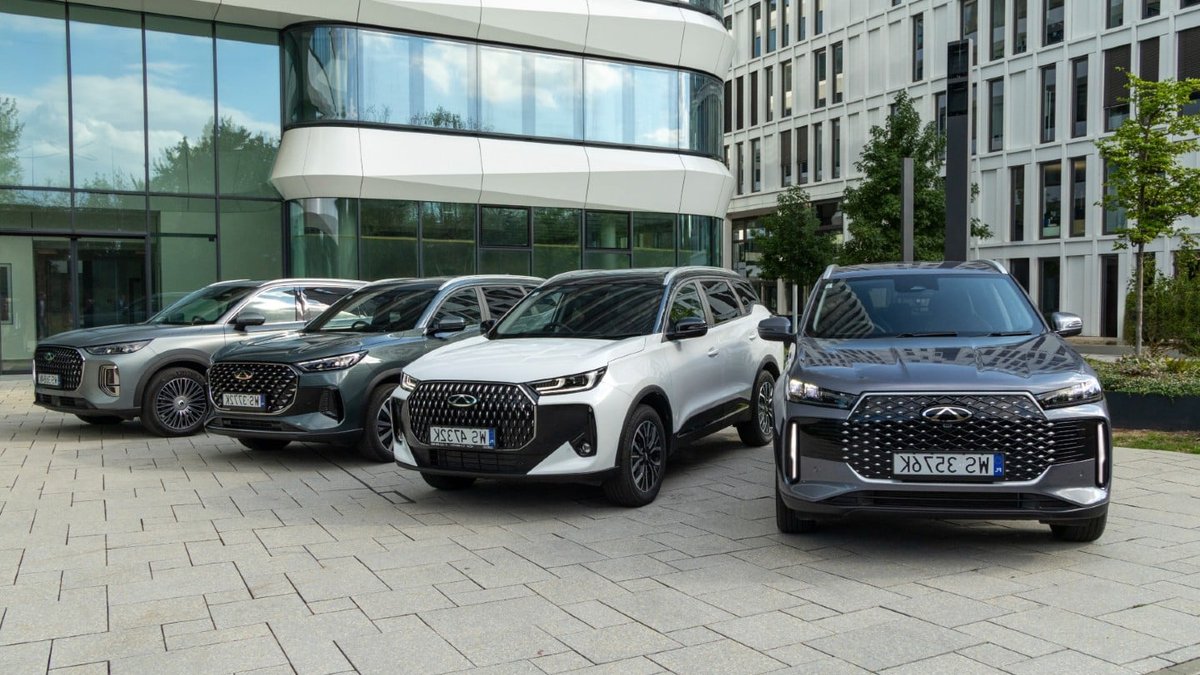
The European Union has set new limits on hybrid car imports, starting on December 1. The regulation creates a temporary cap on how many vehicles can enter the bloc from China and other nations. Officials announced the measure to respond to a sharp rise in foreign vehicle arrivals.
Quotas for Hybrid Imports
The provisional rules apply for 200 days, ending on June 18, 2027. During this time, only 191,780 hybrid cars from China can be imported. This number comes from an annual quota of 350,000 vehicles, adjusted for the shorter timeframe.
Hybrids covered by the restriction include plug-in and full hybrids, as well as mild hybrids. It does not apply to range-extender vehicles. Those cars are treated as battery-electric models and face separate tariffs.
Read Also: EU Council drops mandatory EV fleet quotas
The EU divides the 200-day measure into three periods. China will receive 86,301 units between December 1, 2026, and February 28, 2027, 88,219 units from March 1 to May 31, 2027, and 17,260 units from June 1 to June 18, 2027.
Other Nations Face Limits
Japan, Türkiye, the United Kingdom, and South Korea also have specific caps. The EU sets these country-specific limits based on 2025 import records, increased by a little over 15%. Nations accounting for more than two percent of 2025 EU imports receive individual allocations.
Other countries, including Morocco, Serbia, and the United States, share a residual quota. The table of quotas is as follows:
Allocation per Country:
Quota 1.12.26 – 28.2.27:
Quota 1.3.27 – 31.5.27:
Quota 1.6.27, 18.6.27:
China: 86,301, 88,219, 17,260
Japan: 76,900, 78,609, 15,380
Türkiye: 56,844, 58,107, 11,369
United Kingdom: 47,431, 48,485, 9,486
Republic of Korea: 30,566, 31,245, 6,113
Mexico: 15,640, 15,987, 3,128
Morocco: 10,779, 11,019, 2,156
Serbia: 8,709, 8,902, 1,742
United States of America: 8,317, 8,502, 1,663
Read Also: VW Unveils Electric ID. Polo GTI Racetrack Concept
Imports exceeding these limits are prohibited. The EU describes the rules as a mechanism to set a maximum quantity for hybrid vehicles during the provisional safeguard measures.
Trade Disputes and Overcapacity
The Commission cites growing global production overcapacity as the reason for the sharp increase in hybrid passenger car imports into the EU. The aim is to moderate Chinese exports of hybrid vehicles to the EU, but the rules will also apply to all other hybrid vehicle imports during the 200 days, regardless of their origin. According to the EU Commission, the trade barriers “follow an investigation that showed imports of hybrid vehicles into the EU have increased significantly since 2023”.
For now, the measures are temporary. The EU can adopt definitive trade barriers within nine months of initiating the safeguard investigation. The investigation began on October 30, 2026. The period for establishing other protective mechanisms extends into the summer. Specifically for imports from China, there has already been talk of a permanent hybrid import brake, under which the quota would be allowed to grow by six percent annually.


