
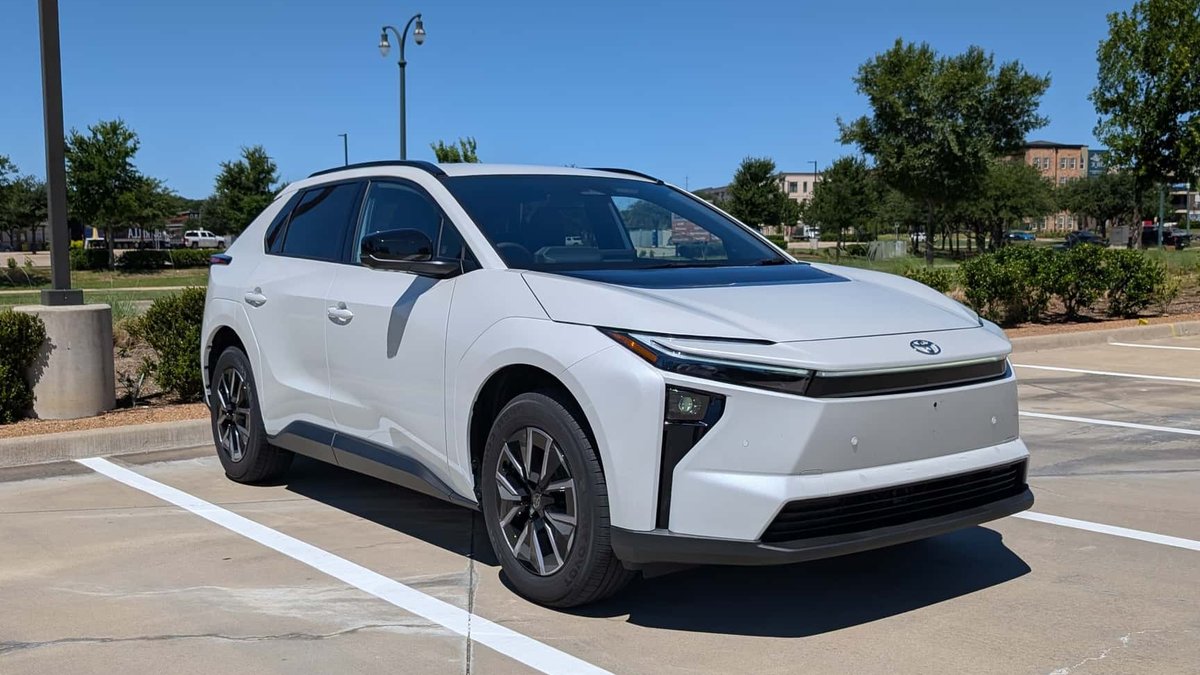
Toyota is paying EV drivers $3,000 to switch to its bZ electric crossover, a move that could reshape the market for owners of older plug‑in models.
Eligibility limits the cash incentive
The “conquest cash” applies only to drivers who currently own a specific set of electric vehicles built between 2020 and 2023. Eligible models include the Ford Mustang Mach‑E, Hyundai Ioniq 5, Kia EV6, Nissan Leaf, Tesla Model 3, Tesla Model Y and Volkswagen ID.4. Buyers must reside in California, and the offer cannot be combined with the state’s upcoming $3,500 incentive aimed at first‑time EV purchasers.
The incentive targets California owners.
Family members living in the same household may transfer the benefit, according to the automaker’s statement. Outside California, Toyota promotes a separate package that includes 0% APR financing for up to 72 months and up to $4,000 in lease cash, which can reduce a 36‑month lease to $349 per month with $3,999 due at signing. Additional rebates of $750 for military personnel and $500 for recent college graduates are also on the table.
Sales momentum fuels the promotion
In the first half of 2026, Toyota sold 17,553 units of the bZ, roughly double the volume recorded in the same period a year earlier. The refreshed crossover, a successor to the bZ4X, offers extended range, faster charging and a more efficient interior layout. Those improvements have helped the model climb the rankings among non‑Tesla electric cars in the United States.
Analysts note that the cash incentive is designed to lure owners of competing EVs who may be dissatisfied with range anxiety or charging speed. By targeting vehicles that are now three to five years old, Toyota hopes to capture drivers whose warranties are expiring and who are considering a trade‑in.
While the cash offer is straightforward, the eligibility list is narrow. Drivers of older EVs not on the specified roster, such as the Chevrolet Bolt or older Nissan Ariya, will not qualify. Moreover, the California restriction limits the reach of the most generous incentive, leaving the broader national package as the primary lure for most prospective buyers.
Given the competitive market, the $3,000 payment could tip the scales for owners weighing a switch. The amount matches the average depreciation of many of the listed models after five years, making the trade‑in financially sensible for those seeking a newer battery pack and updated tech.
The program’s success may depend on how quickly eligible owners decide to act. If the incentive spurs a wave of swaps, Toyota could see a further boost in bZ sales, reinforcing its growing foothold in the electric segment. Conversely, if consumers hold out for additional state or federal credits, the impact could be muted.
For now, the automaker’s strategy reflects a clear attempt to convert existing EV drivers rather than rely solely on new adopters. The combination of direct cash, favorable financing and targeted rebates creates a complex appeal that aligns with the current market’s emphasis on cost‑effective ownership.


